Painting a Mid-Century Ranch House in Torrance
A ranch house does one visual job: it stays low and long, and the paint either helps that or breaks it. Across Torrance, CA the tract streets laid out through the middle of the last century are full of single-storey stucco and wood-sided houses, and every teardown house painting torrance ca celtic hearts has logged shows the same thing about them. Deep eaves, wide fascia and long wall runs set the colour rules, and a painter reads those before opening a can.
Long walls need an even colour

A ranch has few vertical breaks, so a body colour covers a lot of unbroken wall. Mid-tone neutrals and soft earth colours hide the faint waves in old stucco, while a very dark body shows every trowel mark. Two coats of a flat or low sheen acrylic latex on stucco gives an even field, and a flat topcoat hides patching better than a satin would. Patch cracks with an elastomeric caulk or a stucco patch before any colour goes on.
Fascia, eaves and soffits
The deep eave is the defining detail of the style. Painting the fascia and soffit in the trim colour lets the roof edge read as a clean line. The soffit takes less sun and weather than the walls, so a semi gloss enamel holds up there, though sanding and a scuff sand are needed over old oil based paint. A dark fascia against a light body makes a low roof look lower, which suits some houses and not others.
Wood siding and panel sections
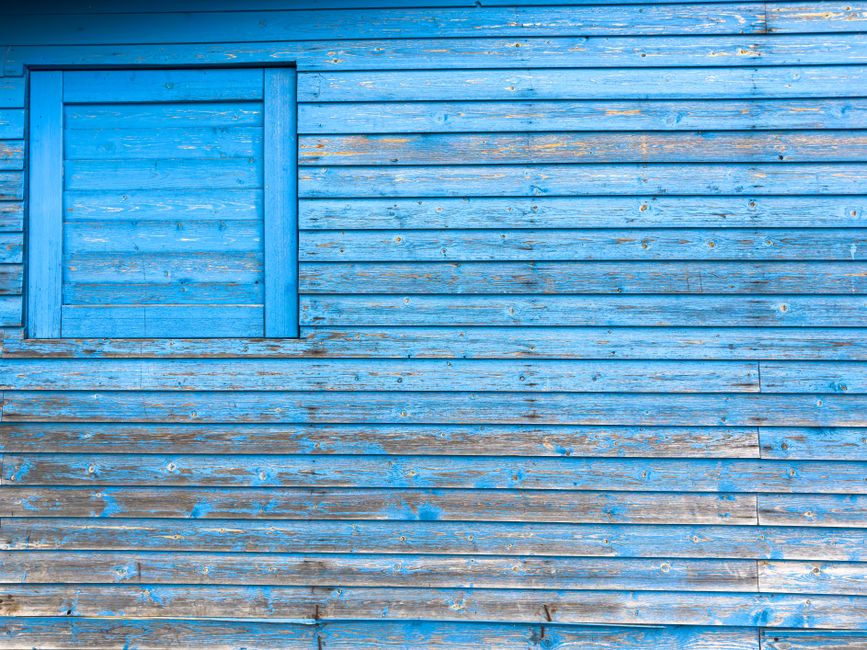
Many ranches mix stucco with a panel of wood siding near the entry or the garage. Wood takes paint differently, so it needs a bonding primer, careful spackle on nail holes and sanding to a clean edge. Paint the wood panel in the body colour, or a deeper step of it, to mark the entry without adding a new colour to the scheme. Use a roller with a medium nap on rough boards and back-brush the seams.
Colours that fit the era
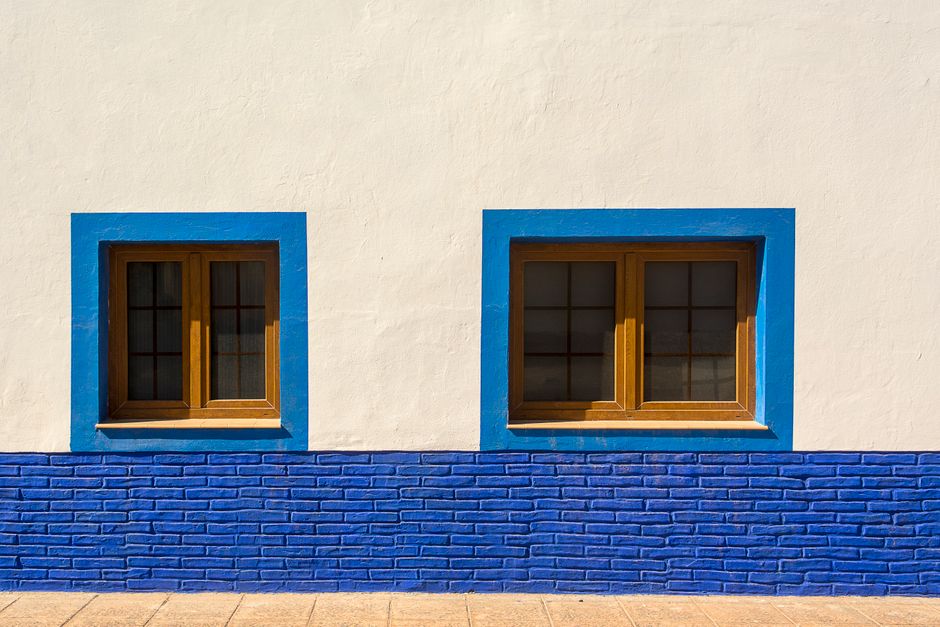
Mid-century palettes leaned on sage, warm grey, soft gold and deep teal, often with a single bold front door. Those colours still work on the street today because they sit well with the plantings and with the trim on the neighbouring houses. Keep the palette to three colours at most, and test a sample swatch on the sunniest wall. The marine layer that rolls in from the Pacific Ocean flattens strong colours, so a muted choice usually looks better than it did on the chip.
Interior ceilings and beams
Inside, the same houses often have vaulted ceilings and open beams that carry into the living area. A flat white ceiling paint keeps the beams in focus, and a satin finish on the beams themselves wipes clean. High ceilings go fastest with an airless sprayer and a back-roll.